Cellular network architecture decoded
An objective breakdown of cellular spectrum standards, physical radio wave propagation, and the hardware limits defining modern network performance.
The electromagnetic spectrum divided
Cellular networks operate across three distinct frequency tiers. Each band represents a direct physical trade-off between signal propagation distance and data throughput capacity.
Low-Band Spectrum
Mid-Band Spectrum
Millimeter Wave
Operating below 1 GHz. This band provides wide-area coverage and penetrates physical obstacles effectively, but delivers limited bandwidth and higher latency.
Operating between 1 GHz and 6 GHz. The critical sweet spot for urban networks, balancing multi-megabit speeds with moderate propagation distance.
Operating above 24 GHz. Delivers gigabit speeds but suffers massive propagation loss from concrete walls, foliage, and even atmospheric moisture.
Protocol claims versus physics
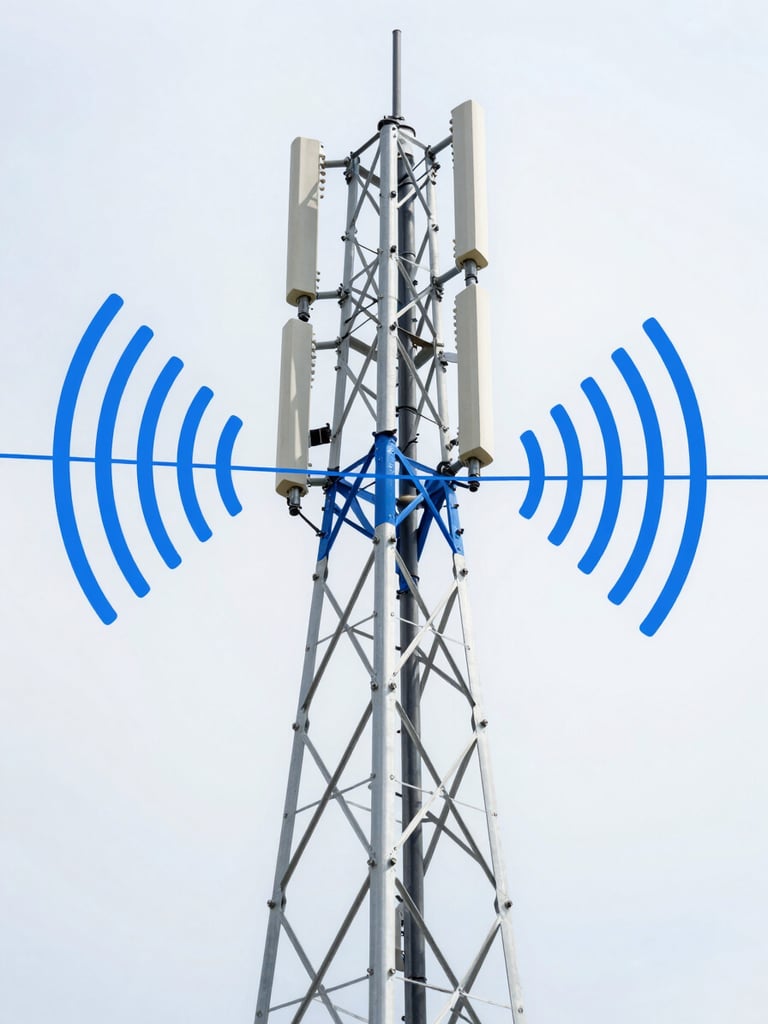
Carrier marketing often promises uniform gigabit connectivity. In practice, radio wave propagation is governed by strict physical laws that dictate signal degradation over distance.
Propagation loss factors
High-frequency signals face severe attenuation. Concrete walls introduce up to thirty decibels of signal loss, while low-emissivity glass blocks millimeter waves entirely.
The laws of electromagnetism cannot be optimized by carrier marketing. Signal propagation remains bound to frequency and material density.
IEEE Spectrum Report
Demystify network infrastructure
Access our complete index of global telecommunications standards and carrier-neutral latency benchmarks.
JACKSON STUDIOS LTD
Carrier-neutral spectrum analysis and network standards.
Reference
R ALADIM, 105
CONJUNTO RESIDENCIAL ESTRELA DO SUL
CAMPO GRANDE - MS
CEP: 79.013-130
BRASIL
© 2019 Jackson Studios LTD -Independent technical reference. No carrier contracts.
Carrier-neutral spectrum analysis